
|
CUT
Brilliance & sparkle |
COLOR
D to Z scale |
CLARITY
Inclusions graded |
CARAT
Weight, not size |
An engagement ring is one of the only purchases most people make once, for a lot of money, with almost no practice beforehand. That combination is exactly why so many people leave the decision to an app or a big-box website and hope for the best. It’s also exactly why it’s worth twenty minutes to actually understand what you’re buying before you buy it. This guide walks through everything that determines whether an engagement ring is worth its price, from the four factors that set a diamond’s value to the certification that proves what you’re actually getting, and why couples across Beaver County, Beaver Falls, and the greater Pittsburgh area still choose to buy this particular ring in person instead of from a screen.
Start With the 4 Cs
Every diamond’s price and appearance comes down to four factors, known in the industry as the 4 Cs: Cut, Color, Clarity, and Carat. Understanding them, even at a basic level, is the single best thing you can do before you start shopping.
Cut
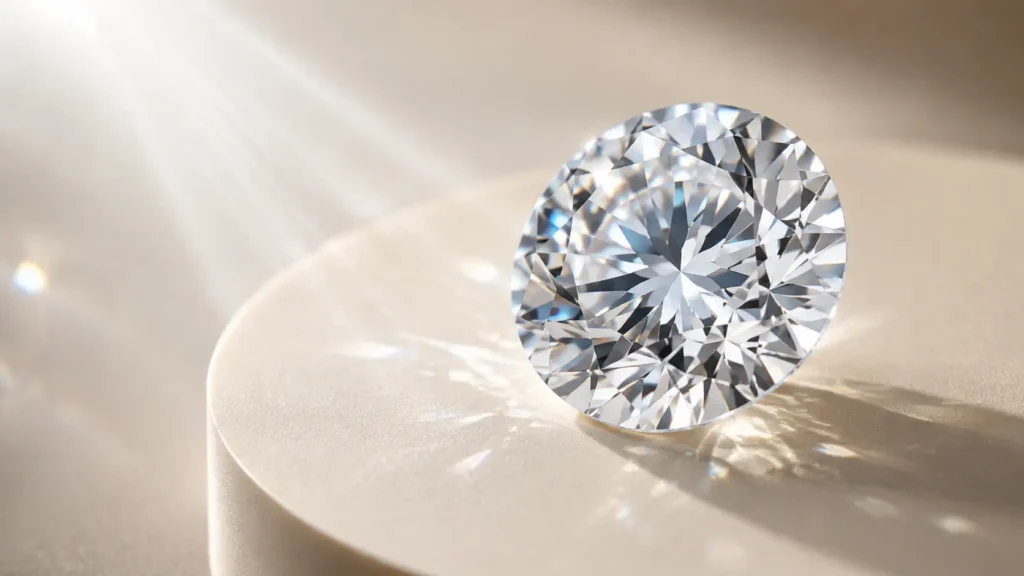
Cut is the factor most shoppers underestimate. It’s not the shape of the diamond (round, oval, cushion), it’s how precisely the diamonds’s facets are angled to catch and reflect light. A well-cut diamond in a smaller carat weight can outshine a larger, poorly cut diamond. If you only prioritize one C, most jewelers will tell you it should be this one.
Color
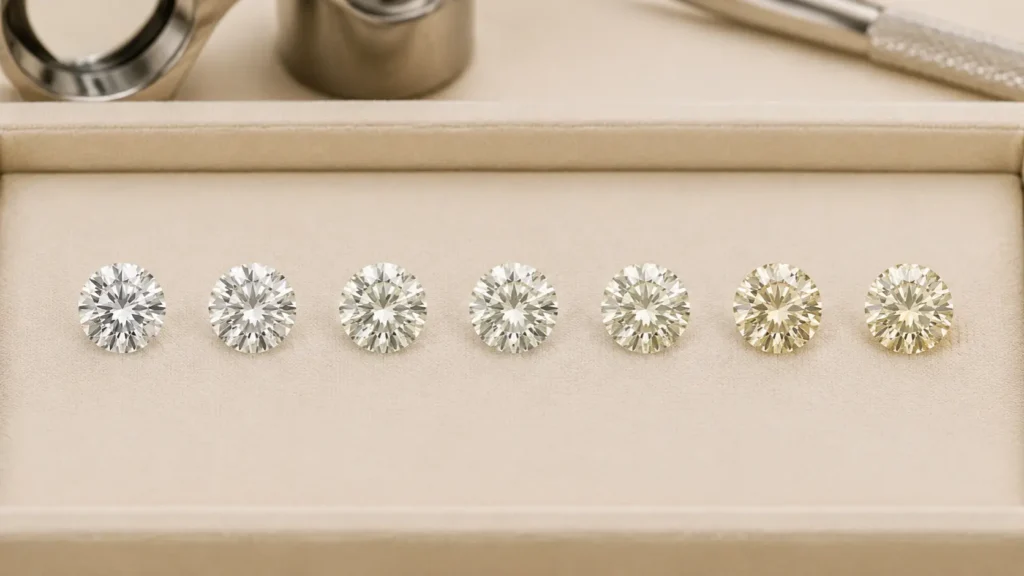
Diamond color is graded on a scale from D to Z, where D is completely colorless and the grades move toward faint yellow or brown as you go down the alphabet. A D color diamond is the rarest and most expensive, but most people can’t detect a color difference to the naked eye until you drop several grades below D, especially once the diamond is set in white gold or platinum, which masks warmth better than yellow gold does.
Clarity
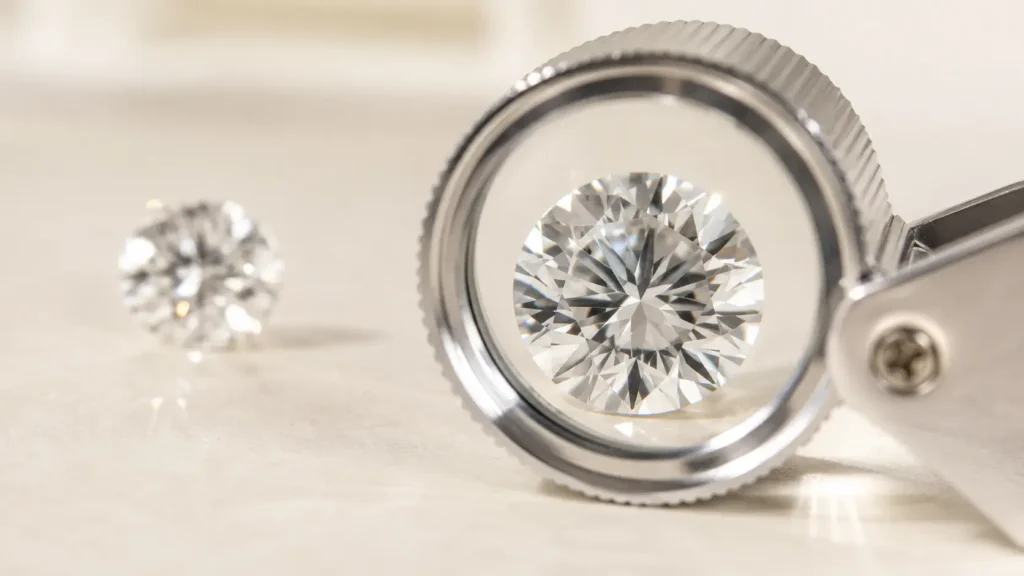
Clarity measures internal and external imperfections, called inclusions and blemishes, on a scale from Flawless down through Included. A grade like SI1 (Slightly Included) sits in a genuine sweet spot for a lot of buyers: any inclusions are typically invisible without magnification, but the price is meaningfully lower than a VS or VVS diamond that looks identical to the eye.
Carat
Carat measures weight, not physical size, which surprises a lot of first-time buyers. Two diamonds of the same carat weight can look different sizes depending on how deep or shallow they’re cut. Below is a general reference for how carat weight translates to visible diameter in a round brilliant cut, the most common shape.
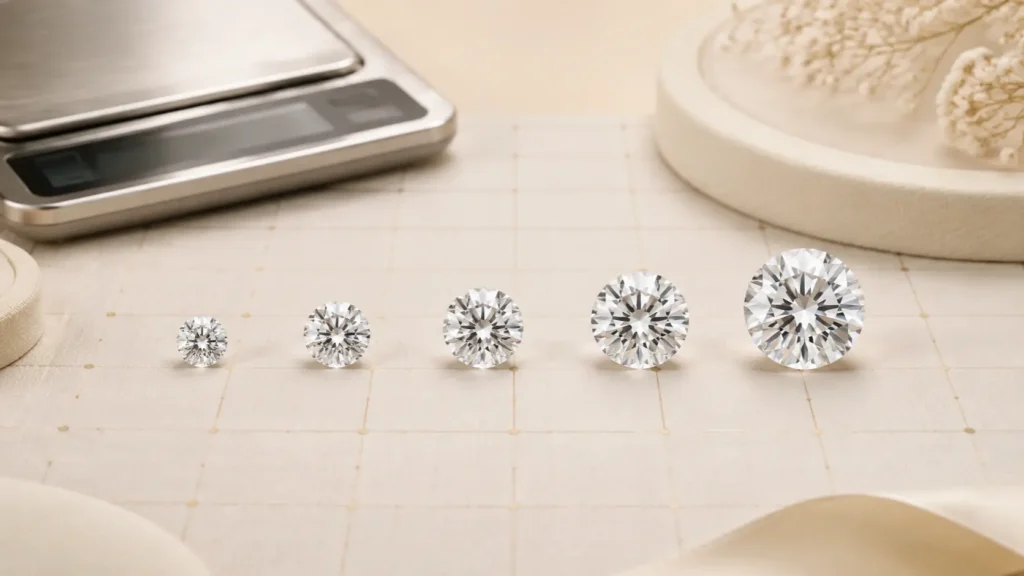
| CARAT WEIGHT | APPROXIMATE DIAMETER (ROUND CUT) |
| 0.75 carat | ≈ 5.8 mm diameter |
| 1.00 carat | ≈ 6.5 mm diameter |
| 1.25 carat | ≈ 6.9–7.0 mm diameter |
| 1.50 carat | ≈ 7.4 mm diameter |
Figures are approximate and vary with cut proportions; a well-cut diamond can face up larger than these numbers suggest.
What Certification Actually Means
A certification, or grading report, is an independent lab’s assessment of a diamond’s 4 Cs, issued by a third party with nothing to gain from the sale. GIA (the Gemological Institute of America) is the most widely respected lab in the industry, and it’s worth asking directly whether a diamond is GIA certified before you buy, especially for any purchase in the certified diamond price range.
Without a certification, you’re relying entirely on the seller’s word for what you’re buying. With one, you know exactly what you own, which matters the day you buy the ring and every day afterward, for insurance, resale, or resizing.
Natural Diamonds, Explained
ALLAN Jewelers carries both natural and lab-grown diamonds, allowing you to choose the option that best matches your personal preferences.
A natural diamond is formed in the earth over a billion years or more, while a lab-grown diamond is created in a controlled environment in a matter of weeks. Both can be chemically identical, and both can be certified, but they are priced very differently, and many buyers have a strong preference one way or the other. If a natural diamond matters to you, say so at the very first conversation with your jeweler and ask to see the certification confirming it.
Choosing a Setting: Solitaire vs. Halo
A solitaire setting puts the full focus on a single center diamond, held by prongs with nothing else competing for attention. It’s the classic choice, and it tends to make the center diamond’s true carat weight and cut quality the whole story.
A halo setting surrounds the center diamond with a ring of smaller diamonds, which does two things: it adds extra sparkle, and it makes the center diamond appear noticeably larger, often 25 to 40 percent larger to the eye, without the cost of actually upgrading the carat weight. If budget is a real constraint but you want maximum visual size, a halo is worth trying on before you decide against it.
What Should It Cost
At ALLAN Jewelers, we work with a broad spectrum of budgets; our engagement ring pricing ranges from a few hundred dollars to over $40,000. We recommend deciding on a total budget first and then prioritizing which of the 4 Cs matters most to you.
The old “two months’ salary” rule is a decades-old advertising slogan, not a financial guideline, and most people today ignore it entirely. A more useful approach: decide on a total budget first, then decide which of the 4 Cs matters most to you, and let that priority guide where the budget goes. Someone who wants maximum size might lean toward a slightly lower color or clarity grade with a halo setting. Someone who wants maximum sparkle and quality might choose a smaller, exceptionally well-cut diamond instead.
Buying Locally vs. Buying Online
Online retailers can offer a wide selection and competitive pricing, but an engagement ring is one of the few purchases where seeing the actual diamond, in person, under real light, on an actual hand, changes the decision. A photo can’t show you how a diamond performs in daylight versus indoor lighting, and a screen can’t tell you how a setting actually feels on a finger day to day.
Buying locally in Beaver County also means the person who sold you the ring is the same person you call when it needs resizing, cleaning, or an insurance appraisal, not a call center in another state. That relationship is worth more than most people realize until they actually need it.
A halo setting surrounds the center diamond with a ring of smaller diamonds, which does two things: it adds extra sparkle, and it makes the center diamond appear noticeably larger, often 25 to 40 percent larger to the eye, without the cost of actually upgrading the carat weight. If budget is a real constraint but you want maximum visual size, a halo is worth trying on before you decide against it.
After You Buy: Appraisal, Insurance, and Resizing
A jewelry appraisal is a written, professional assessment of a piece’s value, separate from its certification, and it’s typically what your insurance company requires to cover the ring against loss, theft, or damage. Jewelry insurance itself usually comes as either a rider on an existing homeowner’s or renter’s policy, or a standalone policy through a specialty insurer, and it’s worth setting up in the same week you get the ring, not after something happens to it.
Ring resizing is common in the first year; hands change size with weather and life changes, and it’s a normal, inexpensive service rather than a sign anything is wrong with the ring.
Browse natural diamonds and diamond engagement rings in person, with straightforward explanations of the 4 Cs for every diamond.
Loose diamonds and vintage or antique settings, for buyers who want a diamond with more history than a mass-produced setting.
Ring resizing, cleaning, and appraisal services after your purchase, from the same in-house jewelers who helped you choose the ring.
Common Questions
What are the 4 Cs of a diamond?
It typically starts with an in-person consultation about style and budget, followed by stone selection, a design rendering you approve before anything is made, hand-crafting, and a final fitting. Every stage is reviewed with you before moving to the next.
What does GIA certified mean?
GIA certified means the diamond has been independently graded by the Gemological Institute of America, a third-party lab with no financial stake in the sale. The certificate documents the stone’s 4 Cs so you know exactly what you’re buying.
What's the difference between a D color diamond and other diamond grades?
D is the highest, most colorless grade on the diamond color scale. Lower grades introduce a faint yellow or brown tint that becomes more visible as the grade drops, though most people can’t detect a difference until several grades below D, especially in a white metal setting.
What does SI1 clarity mean?
SI1, or Slightly Included, means the diamond has minor inclusions that are typically invisible to the naked eye without magnification. It’s a popular choice because it looks eye-clean while costing meaningfully less than higher clarity grades.
How much do diamond engagement rings cost?
Cost depends on all 4 Cs together, plus metal choice and setting style, more than any single factor alone. Deciding your total budget first, then prioritizing which C matters most to you, is a more useful approach than looking for a flat price range.
Where's the best place to buy an engagement ring near Beaver, PA?
For most buyers, an in-person jeweler who lets you see and compare stones under real light, and who will still be there for resizing and appraisals afterward, is worth more than the convenience of buying online. ALLAN Jewelers’ Beaver, PA showroom offers exactly that.
What is a jewelry appraisal and do I need one?
A jewelry appraisal is a written professional assessment of a piece’s value, separate from its certification. Most insurance companies require one before they’ll cover an engagement ring against loss, theft, or damage.
How does jewelry insurance work?
Jewelry insurance typically comes as either a rider added to an existing homeowner’s or renter’s policy, or a standalone policy through a specialty insurer. It generally requires a recent appraisal and covers loss, theft, and accidental damage.
How much does ring resizing cost?
Resizing cost depends on the metal, the amount of size change needed, and whether the setting includes stones along the band. It’s a routine, inexpensive service, not a sign of a problem with the ring. Ask your jeweler for a specific quote for your ring.